
2023
First intervention

12,100
People reached

5
Projects

1,190,587€
Budget spent
Context
Mali continues to face a humanitarian crisis fuelled by a combination of persistent insecurity, community tensions and the effects of climate change. Although initially confined to the northern regions, the conflict has gradually spread towards the centre and south of the country. In 2025, Mali had over 414,000 internally displaced persons . The regions of Gao, Ménaka and Mopti remained the hardest hit, but demographic pressure was also felt in the southern governorates, where the massive influx of displaced people strained basic social services and host communities, already strained by a scarcity of resources.
Population movements remained volatile and closely linked to the internal conflict, which forced thousands of people to make sudden displacements to safer areas. Women and children accounted for 58% of the displaced population, a figure that highlights the importance of interventions aimed at protection and access to essential services. According to the United Nations Office for the Coordination of Humanitarian Affairs (OCHA), in 2025, approximately 6.4 million people required humanitarian assistance, with around 1.5 million individuals in a state of acute vulnerability, lacking the basic means for daily subsistence, including female heads of household, the elderly and people with disabilities. In addition to food insecurity, which was particularly acute in the Bankass and Douentza areas, the humanitarian response had to contend with structural obstacles such as chronic underfunding and persistent difficulties in accessing areas where needs are greatest.


INTERSOS’ intervention
In 2025, the organisation’s work was characterised by an integrated approach in the sectors of Protection and Health, aimed at ensuring comprehensive support for populations affected by the conflict, internally displaced persons and host communities, with a priority focus on women, children and people with disabilities.
In the Protection sector, we have ensured the management of the most vulnerable cases and the creation of safe spaces, where women and girls have benefited from vocational training programmes aimed at generating income. Awareness-raising campaigns, which reached over 63,000 people, focused on the prevention of gender-based violence, child protection and the promotion of support services available locally, ensuring that the most isolated communities are aware of their rights and how to access free healthcare services. At the same time, we provided psychosocial support and medical care to 206 survivors of violence and abuse.
In the Health and Nutrition sector, INTERSOS supported five community health centres by supplying essential medicines and strengthening the capacity of local staff, ensuring screening and treatment for malnutrition, particularly for children and breastfeeding mothers.
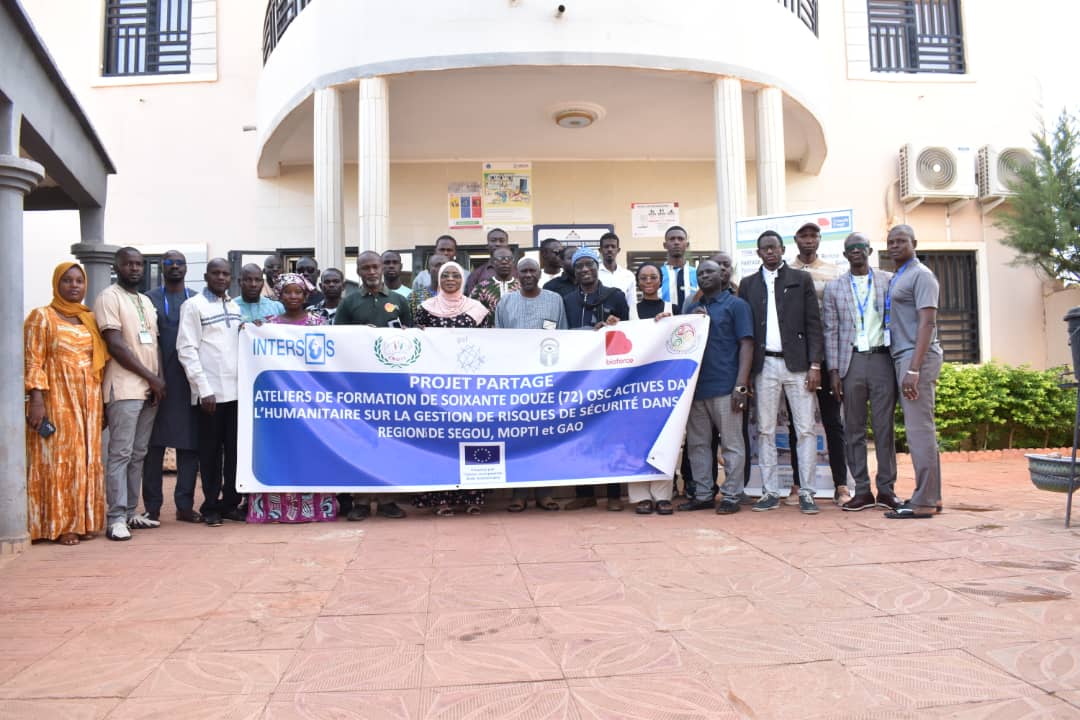
2025 was marked by the work carried out alongside local organisations, which are on the front line. This was achieved through the PARTAGE project, an innovative initiative that has strengthened the security risk management capacities of 72 local civil society organisations, thanks in part to the launch of a dedicated website offering over 100 practical tools tailored to the Malian context. In addition, 38 national NGOs were supported through the provision of micro-grants aimed at ensuring their operational sustainability. This commitment to strengthening local capacities guarantees not only the immediate effectiveness of aid, but also the long-term sustainability of interventions in an extremely unstable operational context.