
2019
First intervention

85,000
People reached

7
Projects

1,312,698€
Budget spent
Context
Since 2010, Niger has been facing a multidimensional crisis caused by extreme weather events, growing insecurity, rapid population growth and chronic poverty. Located in the heart of the Sahel, the country is the epicentre of migration flows and mass displacement: on the one hand, the influx of refugees fleeing conflicts in Mali, Burkina Faso and Nigeria; on the other, a high number of internally displaced persons, which, as of June 2025, exceeded 500,000 people. The Tillabéri region remains the area of greatest tension, hosting almost half of the internally displaced population. Added to this pressure is the migration crisis on the desert route: in 2025, the Assamaka transit centre recorded over 16,000 migrants turned back from Algeria, people often in extremely vulnerable conditions who require immediate protection and assistance.
The regime change in July 2023 had lasting repercussions in 2025, with a significant reduction in international funding and administrative restrictions that slowed down humanitarian operations. Against this backdrop, food insecurity — exacerbated by prolonged droughts — and serious protection risks remained the main challenges. Civilian populations are exposed to direct attacks, forced displacement and gender-based violence, whilst the denial of humanitarian access and the lack of essential infrastructure undermine the dignity and health of communities. With over 2.6 million people in need of humanitarian aid to survive, we had to adapt our work rapidly in 2025. Faced with funding shortages and growing insecurity, the top priority was given to immediate relief: medical care, protection of vulnerable people and access to safe drinking water.
SECTORS OF INTERVENTION


INTERSOS’ intervention
In 2025, INTERSOS operated in Niger by combining protection interventions with water and sanitation services, reaching around 85,000 people. The organisation’s efforts focused on the areas of greatest tension, such as Niamey, Agadez, Tillabéri and Tahoua, providing vital assistance to refugees, internally displaced people, host communities and migrants turned back along desert routes.
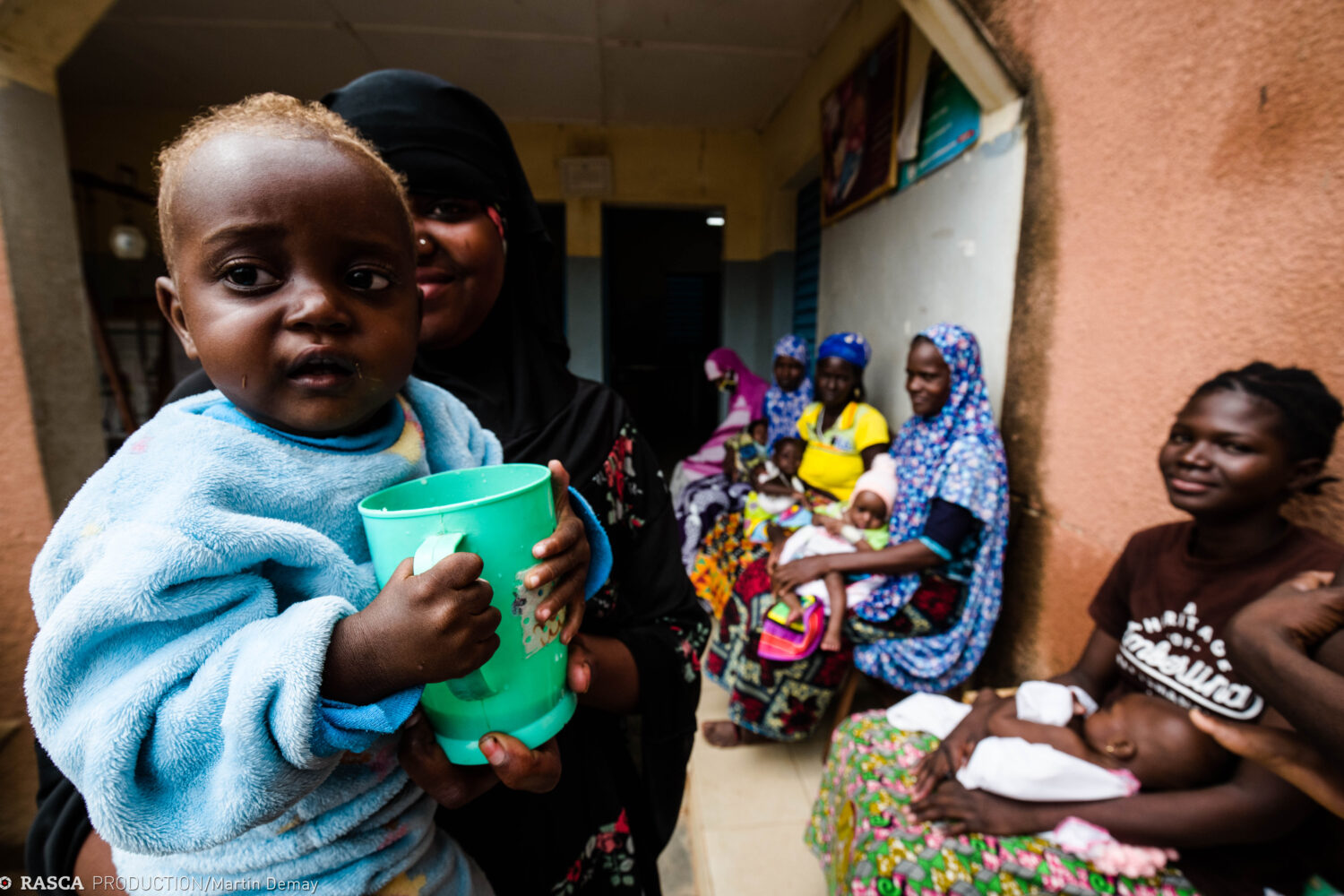
The Protection sector was at the heart of the intervention, with a priority focus on the protection of mothers and children. In Niamey, the management of the “Guichet Unique” enabled 4,705 people to access a centralised point for registration and the coordination of essential services. This is, in fact, a multi-service centre which, rather than forcing vulnerable people to visit different offices across the city, centralises everything in a single safe location.
To safeguard the dignity of women and girls who have survived violence or are at risk, 2,740 kits containing hygiene products and essential items were distributed, whilst 235 people received comprehensive support, including medical, psychological and legal assistance. We have placed the future of the most vulnerable children at the centre of our work: despite growing bureaucratic difficulties, our experts have conducted in-depth interviews and drawn up detailed assessments. This work has enabled us to make crucial decisions based solely on the children’s well-being, ensuring that each of them receives the protection, care and pathway to growth best suited to their situation.
INTERSOS also responded to the water shortage in Assamaka, a critical transit point for migrants turned back from Algeria. Thanks to an emergency system involving water transport by lorry and the establishment of new public water points, access to drinking water was guaranteed for over 25,000 people, reducing the strain on scarce local resources and thus helping to prevent the spread of diseases caused by dirty water or water shortages in an extremely fragile environment.