




In Kabul, INTERSOS has launched sewing courses that represent a chance at income and hope for mothers of malnourished children.
In a small tailoring classroom in Kabul, Yasamin Nabil spends her days teaching sewing skills to mothers whose children are suffering from malnutrition. What may look like a simple tailoring lesson is, for these women, a pathway to dignity, income, and hope.
Afghanistan is facing one of the world’s most severe nutrition crises, with millions of children affected by malnutrition. Poverty, unemployment, and limited opportunities for women to earn an income have left many families struggling to provide enough food for their children. To address these challenges, INTERSOS, supported by the Italian Ministry of Foreign Affairs and International Cooperation (MAECI) through the Italian Agency for Development Cooperation (AICS), launched an integrated health, nutrition, and livelihood initiative in five villages of Kabul, supporting families with malnourished children.
For many of the women attending the training, economic hardship was a daily reality. Most had no stable source of income and were caring for children suffering from malnutrition. “The first problem my students had was poverty,” Yasamin explains. “All of them had a malnourished child at home and no reliable breadwinner. They joined this program so they could learn a skill and find a way to support their families.”
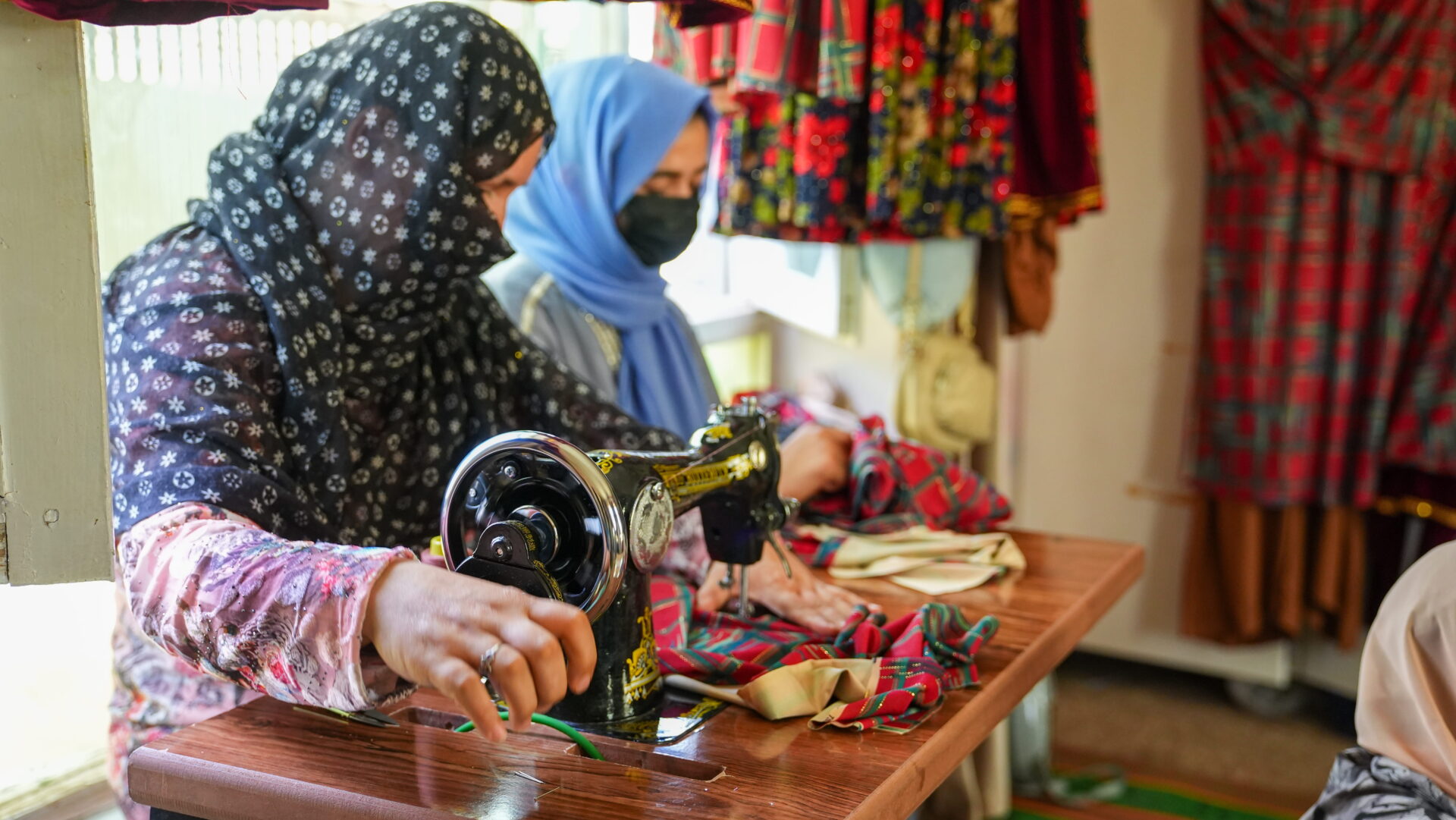 The three-month tailoring course provides practical vocational training to 60 mothers across five locations in Kabul. Starting from the very basics, participants learn how to cut fabric, operate sewing machines, and produce five different types of traditional clothing. The project provides all the materials needed for learning, including sewing machines, fabric, irons, thread, and other equipment. To help the women continue earning after graduation, each participant will also receive a tailoring kit. The trainees practice by sewing clothes for themselves and their children, allowing them to build confidence while creating useful items for their families.
Yasamin has witnessed remarkable progress among her students. “When they first arrived, some did not even know how to hold a needle,” she says. “Today, they can sew complete garments from cutting the fabric to the final stitch.” Beyond technical skills, the training is helping the women regain confidence in their ability to provide for their households.
The tailoring classes were designed as a sustainable response to malnutrition and poverty. While food assistance helps families meet their immediate needs, vocational training creates opportunities for long-term income generation, enabling mothers to support their children and reduce their dependence on humanitarian aid.
As the course nears completion, the women are preparing to take their new skills home and start earning independently. For Yasamin, their success is measured not only by the clothes they produce, but by the future they are creating. Every stitch represents a step toward healthier children, stronger families, and a more hopeful tomorrow.