



In Yemen, over 10 years of conflict have left the health system fragile and vaccination coverage insufficient, paving the way for outbreaks of measles, polio and diphtheria. Yet a coordinated health response is delivering concrete results: as of March 2026, poliovirus transmission has been interrupted in the south of the country. INTERSOS is at the forefront of this effort, with over 40,000 children under 5 vaccinated.
World Immunization Week 2026 — “For every generation, vaccines work”
In Yemen, more than a decade of conflict has profoundly weakened the health system. The resulting decline in vaccination coverage has opened the door to outbreaks of measles, polio, and diphtheria, affecting the most vulnerable above all: children and pregnant women. For many of them, a vaccine makes the difference between life and a preventable disease. But something is changing.
A vaccination programme that endures
Launched in 1974, the National Immunization Programme (EPI) continues to operate despite enormous challenges. With the support of international partners, it provides free vaccines against more than eleven life-threatening diseases, including diphtheria, pertussis, tetanus, poliomyelitis, measles, and hepatitis B, and relies on the daily work of local health facilities, mobile teams, and door-to-door awareness campaigns to reach even the most isolated communities.
Polio: the numbers behind a change
One of the most significant achievements in recent years concerns circulating vaccine-derived poliovirus type 2 (cVDPV2), which Yemen has been battling since 2021. In 2024, 187 confirmed cases were reported across 15 governorates. In 2025, confirmed cases dropped to 29, concentrated mainly in the northern part of the country. As of 16 March 2026, virus transmission has been interrupted in southern Yemen — an extraordinary achievement, made possible through a massive reinforcement of the health system.
Between 2024 and 2025, over 18,800 health workers were trained to improve routine immunization services, and 800 specialists received advanced training in epidemiological surveillance and sample management. Laboratories in Aden, Sana’a, and Taiz were strengthened with new supplies and ongoing training for laboratory staff. In the field, more than 7,000 vaccination teams were deployed, and four national vaccination campaigns achieved 100% coverage.
INTERSOS on the front line
In this context, INTERSOS operates as an integral part of the national health response, with interventions at both community level and within primary health care facilities.
In communities, health volunteers trained by INTERSOS work every day to promote positive health-seeking behaviours, counter vaccine misinformation, and ensure children complete their vaccination schedules through defaulter tracing activities. Many of these are displaced children, born in emergency settings, who risk remaining invisible to the health system without this outreach work.
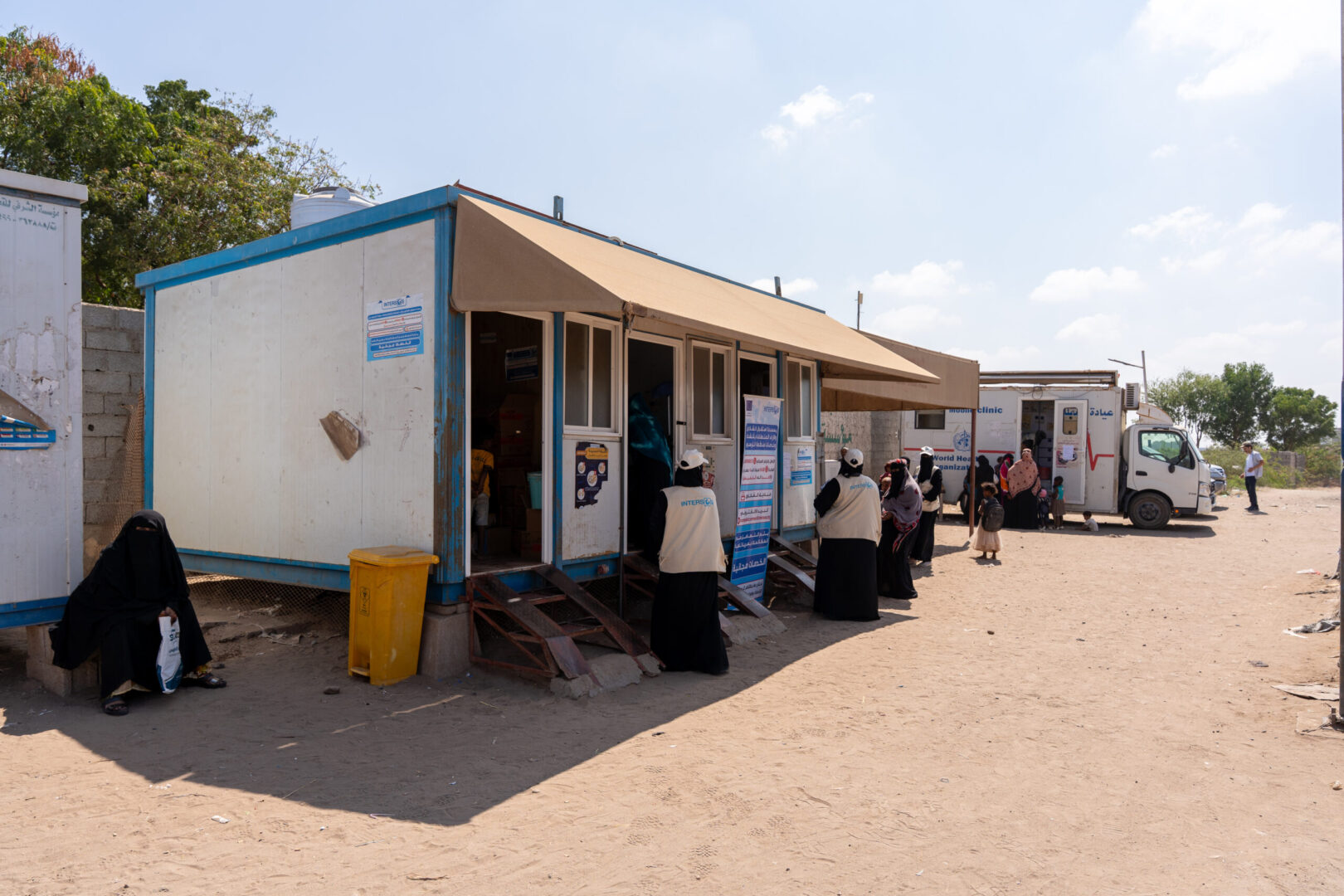
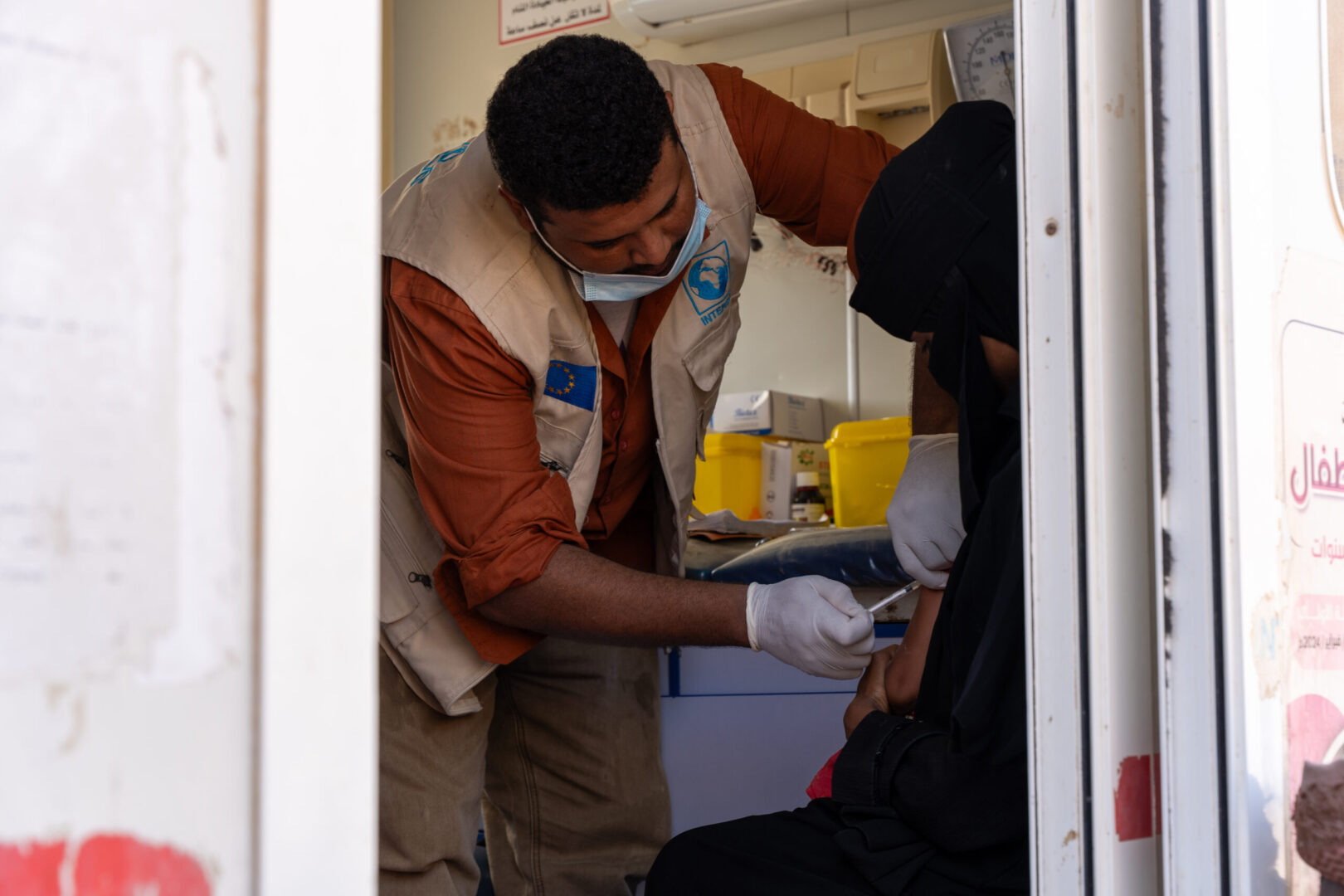
In health facilities, INTERSOS delivers integrated services through mobile clinics and fixed facilities, with particular attention to displaced and hard-to-reach populations. Through these interventions, INTERSOS has vaccinated a total of 40,200 children under five — 20,564 boys and 19,635 girls — ensuring protection for those who needed it most.
This World Immunization Week, the progress made in Yemen is a reminder that even in the most complex contexts, vaccines work — and that the joint commitment of health workers, volunteers, and organisations can truly make a difference. For every generation.